
Updated November 14, 2026 · Sisu Tint & Wraps is a GeoShield Pro Dealer installing paint protection film in Ham Lake, MN.
Matte paint looks incredible — and it’s one of the hardest finishes to keep perfect. You can’t polish out a scratch or wax it like gloss paint, and a Minnesota winter of sand, salt and snow brushes is brutal on it. That’s where matte and satin paint protection film comes in. Whether you have factory matte paint or want to give a gloss car a satin “stealth” look, this guide covers how the film works, who it’s for, how it’s installed, what it costs and how to care for it — based on the cars we protect every week in the Twin Cities.
Key takeaways
- Matte PPF is clear urethane film with a satin top layer. It stops rock chips and scratches and self-heals light swirls with heat.
- Two uses: protecting factory matte paint, or converting gloss paint to a satin “stealth” look that’s fully removable.
- Coverage matters more than with gloss film. On a gloss car, a partial front-end install leaves a visible matte-to-gloss line, so full body or full panels are recommended.
- Care is different: no wax, polish or brush car washes — matte-safe soap and sealants only.
- Cost: matte film is quoted by vehicle and usually runs higher than gloss film because it takes more material and install precision.
In this guide
- What is matte (stealth) PPF?
- Who matte PPF is for
- Gloss vs. satin vs. matte: which finish?
- Your film options
- Factory matte paint vs. a stealth conversion
- Partial or full-body coverage?
- How we install matte PPF
- Matte PPF vs. a satin vinyl wrap
- Ceramic coating over matte PPF
- Why matte PPF is worth it in Minnesota
- How to care for matte PPF
- What matte PPF can’t do
- What does matte PPF cost?
- Questions to ask any installer
- FAQ
What is matte (stealth) PPF?
Paint protection film (PPF) is a clear, flexible urethane layer that sits on top of your paint and takes the hits — rock chips, sand, salt, bird droppings and light scratches — so the paint underneath doesn’t. Matte PPF works the same way, but its top coat is textured to diffuse light, giving a satin, low-glare finish instead of a shine.
We install GeoShield Ceramic Shield Matte Clear: a 6.5-mil thermoplastic polyurethane (TPU) film with a self-healing, hydrophobic top coat, backed by a 10-year warranty against yellowing, cracking and peeling. Light swirls and fine marks in the film disappear with heat from the sun, warm water or a heated garage.
It does two jobs:
- Protects factory matte paint. Matte finishes can’t be polished or buffed without ruining the sheen, so preventing damage is the only real option. Matte PPF keeps the factory look and takes the abuse.
- Converts gloss paint to satin. Applied over gloss paint, matte film gives a smooth satin “stealth” finish while protecting the paint. Remove it later and your original gloss paint is underneath.
Who matte PPF is for
Matte PPF is a great fit if you:
- Own a car with factory matte or frozen paint — BMW Frozen colors, Mercedes-AMG Magno paints, Porsche and Audi matte options, Lamborghini and other exotic matte finishes.
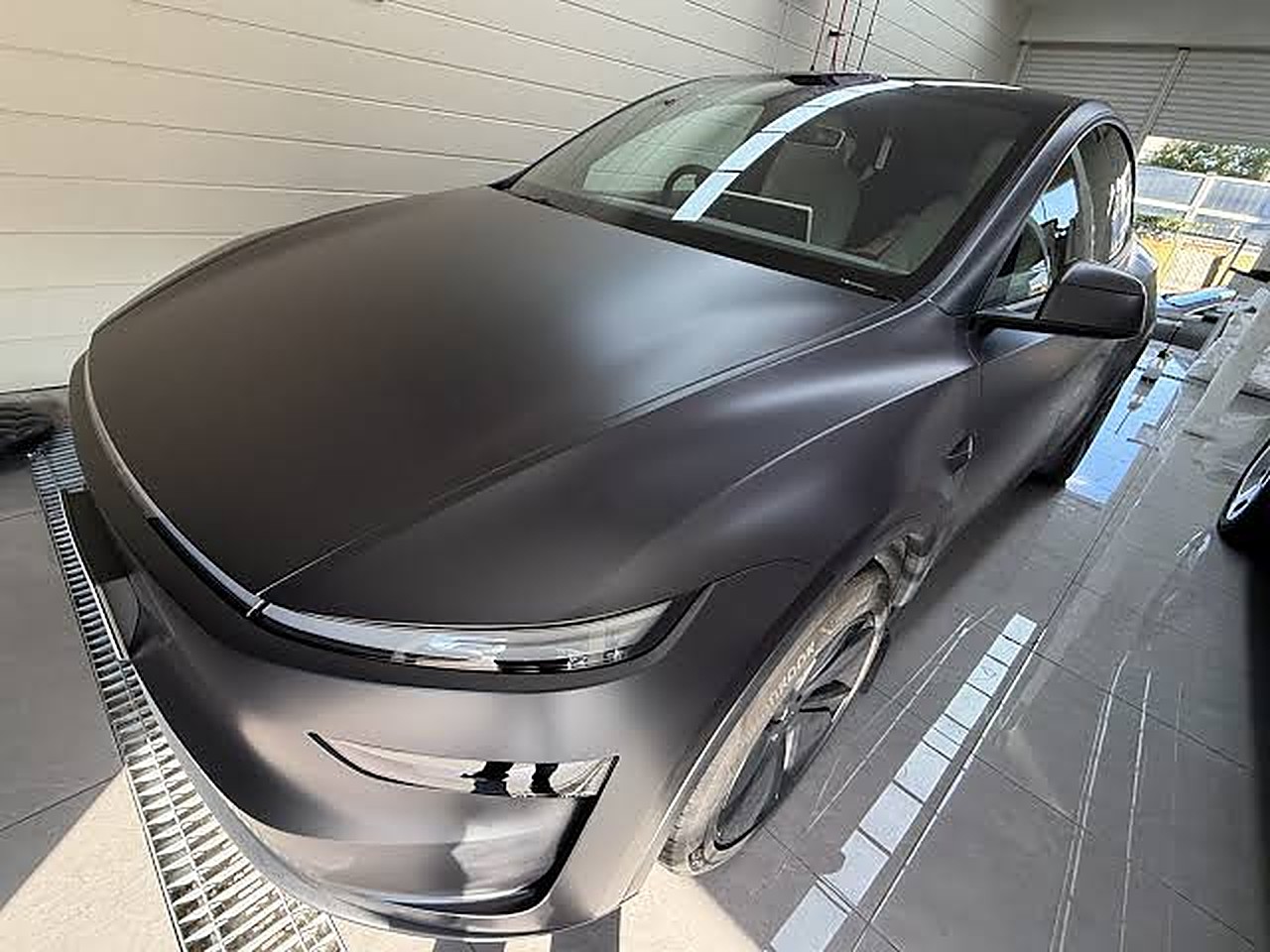
- Want a satin look without a color change — especially popular on Tesla Model 3 and Model Y, Porsche 911s, BMW M cars, Corvettes, Mustangs and blacked-out trucks.
- Plan to keep the car looking new long-term or protect resale value, since the original paint stays untouched under the film.
- Drive a lot of highway miles — I-94, I-35, Highway 10 and 169 throw a constant stream of sand and gravel at the front end.
Gloss vs. satin vs. matte: which finish?
“Matte” and “satin” get used interchangeably, but sheen varies by film. Here’s how the three looks compare:
| Gloss | Satin | Matte | |
|---|---|---|---|
| Look | Wet, reflective shine — film is nearly invisible | Soft sheen with some depth; the most common “stealth” look | Flat, low-reflection finish |
| Shows swirls & scratches | Most | Less | Least |
| Shows water spots & streaks | Less | More | Most — dry promptly |
| Wax / polish | Yes (film-safe products) | No | No |
| Best for | Keeping gloss paint looking stock | Stealth conversions on gloss paint | Factory matte paint |
Not sure which you’ll like? We can show you film samples on your own paint in natural light at the shop before you decide — sheen looks different outdoors than under shop lights.
Your film options
| Film | Finish | Typical use |
|---|---|---|
| Gloss Clear | High gloss, nearly invisible | Protecting gloss paint without changing the look |
| Matte / Satin Clear | Satin, low glare | Factory matte paint, or a stealth conversion on gloss paint |
| Gloss Black | Deep high-gloss black | Roofs, mirrors, trim and blacked-out accents |
| Matte Black | Deep matte/satin black | Satin black roofs, hoods and accents |
All four are GeoShield Ceramic Shield films: self-healing, hydrophobic and covered by a 10-year warranty. See packages on our paint protection film page.
Factory matte paint vs. a stealth conversion
Protecting factory matte paint
Factory matte paint is the highest-stakes job. A scratch or chip usually means a repaint of the whole panel, because matte paint can’t be spot-repaired or blended invisibly. Matte film over matte paint keeps the original look almost exactly, and it’s the best insurance you can buy for an expensive finish. We confirm whether a car has true matte paint, a satin clear coat or an existing wrap before quoting, since each needs a different approach.
Converting gloss to stealth
On a gloss car, matte film changes the look of every panel it covers — that’s the point. Black, white, gray and darker metallic colors tend to look best in satin. Because the original gloss paint stays underneath, it’s a reversible way to get a custom look that can actually help at resale rather than hurt it like a permanent repaint can.
Partial or full-body coverage?
With clear gloss film, a front-end package blends in because film and paint shine the same. With matte film on gloss paint, every edge of the film shows as a satin-to-gloss line. That’s why we recommend:
- Stealth conversions: full body, so the whole car has one consistent finish.
- Factory matte paint: any coverage works, since film and paint share a similar sheen — but full front or full body is still the safest choice for a finish that can’t be polished.
- Budget option: full panels rather than partial ones (a whole hood instead of a partial hood), so the transitions land on natural body lines. Our PPF coverage packages guide explains which areas take the most hits.
How we install matte PPF
Matte film is less forgiving than gloss. It shows stretch marks, fingerprints from handling and uneven heat more easily, so the process matters. Here’s how we do it at our Ham Lake shop:
- Inspection. We check paint condition, confirm whether the finish is paint or vinyl, and point out existing chips or defects — film will protect them but won’t hide them.
- Wash and decontamination. A full wash, iron and tar removal, and clay where safe for the finish. On matte paint we use matte-safe products only — no polishing.
- Prep. Panels are wiped down with a panel prep so nothing is trapped under the film. Badges, trim or lights may come off where needed for cleaner edges.
- Patterning. Film is pre-cut to fit your exact vehicle, with extra material for wrapped edges where the panel allows it.
- Application. Film is laid with slip solution and squeegeed out. Heat and stretch are kept to a minimum on matte film so the sheen stays even.
- Edges and corners. Edges are wrapped around panel edges wherever possible so seams are hidden and the film resists lifting from washes and winter grime.
- Curing and inspection. We inspect the car under lights and in daylight. Small moisture pockets can take a few days to a couple of weeks to evaporate, especially in cold weather.
How long does it take? A full-front package is typically about a day. A full-body matte install usually takes several days, depending on the vehicle and how much disassembly it needs. We’ll give you a timeline with your quote.
Matte PPF vs. a satin vinyl wrap
Both can give your car a satin look, but they’re built for different jobs. A vinyl wrap is mainly about appearance — it changes color and adds light protection. PPF is mainly about protection — it’s thicker, absorbs impacts and self-heals.
| Matte / satin PPF | Satin vinyl wrap | |
|---|---|---|
| Main purpose | Protection (with a satin look) | Appearance and color change |
| Rock chip protection | Strong — thick urethane absorbs impacts | Light |
| Self-healing | Yes, with heat | No |
| Color options | Clear satin, gloss black, matte black | Hundreds of colors and finishes |
| Warranty / lifespan | 10-year warranty | Typically 5–7 years for premium cast vinyl |
| Removal | Peels off to reveal original paint | Peels off to reveal original paint |
Want a new color and protection? Some owners wrap the car in a color they love and add PPF on the high-impact areas. Our vinyl wrap care guide covers how to keep a satin wrap looking right.
Ceramic coating over matte PPF
A ceramic coating made for matte finishes can go on top of matte PPF. It doesn’t add chip protection — the film does that — but it makes the surface slicker, so bugs, road grime and water spots release more easily, and it helps the film resist staining. The key is using a matte-specific coating: a standard gloss coating can add shine and change the look of the film. Our post on PPF vs. ceramic coating in Minnesota explains how the two work together.
Why matte PPF is worth it in Minnesota
Winter is hard on matte finishes. Sand and grit from plowed roads pit the front end, salt brine sits on the paint for months, and frozen snow brushes leave marks you can’t polish out on matte paint. Spring brings potholes and loose gravel, and summer brings bugs and tar. A film layer takes all of that instead of your paint — and when it’s time to sell, the film comes off to reveal paint that looks like it did the day you picked the car up.
How to care for matte PPF
- Wait about a week after install before the first wash.
- Hand wash with the two-bucket method, a pH-neutral matte-safe soap and a clean microfiber mitt. Touchless washes are fine; avoid brush washes.
- Blot or blow dry instead of rubbing, and don’t let water dry in the sun — matte shows water spots more than gloss.
- Never wax, polish or use compound on matte film. It fills the texture and leaves shiny patches.
- Use matte-safe bug and tar remover and matte-specific detail sprays or sealants.
- Rinse road salt off often in winter, including wheel wells and lower panels.
- Keep pressure washers about 12 inches or more back from edges and seams.
- Let heat do the work. Light swirls in the film often disappear on a warm day or in a heated garage.
What matte PPF can’t do
- It won’t fix damaged paint. Chips, scratches and orange peel show through the film. Chips should be touched up before install.
- It won’t stop everything. Film absorbs everyday rock chips and scratches, but a large rock at highway speed, a deep key scratch or a collision can still damage it.
- It isn’t a color change. Clear matte film changes sheen, not color. For a new color, look at a wrap or our matte black film on accents.
- It needs matte-safe care. The wrong products can leave shiny spots that are hard to undo.
What does matte PPF cost?
Pricing depends on a few factors:
- Coverage — front end, full front, track package or full body.
- Vehicle size and shape — complex bumpers, vents and aero pieces take more time and material.
- Disassembly — removing badges, lights or trim for wrapped edges.
- Paint condition — chips that need touch-up or a finish that needs extra decontamination.
Our gloss PPF packages start at $299.99 for a basic front and $1,799.99 for full front. Matte film is quoted by vehicle and generally costs more than gloss, since it takes more precise installation and stealth conversions usually need full-body coverage. Request a free quote and we’ll price the exact coverage you want.
Questions to ask any installer
Whether you choose us or someone else, these questions separate a good matte install from a bad one:
- Which film brand and product line do you use, and is the warranty registered with the manufacturer?
- Do you pre-cut patterns or bulk-install, and how do you handle edges?
- How do you prep factory matte paint without polishing it?
- Can I see a finished matte job in daylight?
- What aftercare products do you recommend?
At Sisu, we’re a GeoShield Pro Dealer, every film is backed by the manufacturer warranty, and our team keeps up with new films and techniques — including our yearly trip to the SEMA Show in Las Vegas.
FAQ
What is stealth PPF?
“Stealth” is a common name for matte or satin clear paint protection film. It protects the paint like regular PPF but gives a satin, low-glare finish — on gloss paint it creates a matte look.
Can you put matte PPF on gloss paint?
Yes. Matte clear film over gloss paint turns the finish satin while protecting it. If you remove the film later, the original gloss paint is underneath.
Should I put PPF on factory matte paint?
We recommend it. Factory matte paint can’t be polished or buffed to remove scratches, so preventing damage with matte PPF is the best way to keep it looking right.
Can I get matte PPF on just the front of my car?
On factory matte paint, yes. On gloss paint, a partial install leaves a visible line where satin film meets gloss paint, so we recommend full body or full panels for stealth conversions.
Is matte PPF better than a satin vinyl wrap?
For protection, yes — PPF is thicker, absorbs rock chips and self-heals. A vinyl wrap is better if you want a new color, with hundreds of options. Some owners combine both.
Does matte PPF turn yellow?
Modern TPU films with UV-stable top coats resist yellowing. GeoShield Ceramic Shield matte film carries a 10-year warranty against yellowing, cracking and peeling.
How long does matte PPF last?
GeoShield Ceramic Shield matte film is backed by a 10-year warranty. With proper care, it keeps protecting your paint for years.
How long does a matte PPF install take?
A full-front package typically takes about a day. Full-body matte installs usually take several days depending on the vehicle.
Can you ceramic coat matte PPF?
Yes, with a matte-specific coating. It makes the film easier to clean and helps resist staining without adding shine.
Can you wax matte PPF?
No. Wax, polish and compounds will leave shiny patches on matte film. Use matte-safe soaps, detail sprays and sealants instead.
Is matte PPF removable?
Yes. A professional can remove the film, and the paint underneath is protected from the chips and fading it would otherwise have picked up. Removal is best done by a pro to avoid lifting weak or repainted clear coat.
Get matte PPF anywhere in the Twin Cities
Whether it’s a factory matte finish or a stealth conversion, we’ll help you choose the right film and coverage. Get a free quote, call (952) 698-4058 or visit our Ham Lake shop Monday–Friday, 8–5 (Saturday by appointment). We protect vehicles across Minnesota, including Minneapolis, St. Paul, Blaine, Maple Grove, Brooklyn Park, Coon Rapids, Andover, Anoka, Lino Lakes, Forest Lake, Elk River.