
Search “PPF vs. ceramic coating” and most of what comes up is written for places where the biggest threats are heat, UV and bugs. Those guides aren’t wrong — they’re just written for a different set of roads. Up here, the question changes once the first plow truck rolls out in November.
For a great warm-climate take, our friends at Southern Tint & Detail Pros in Louisiana wrote a detailed breakdown: PPF vs Ceramic Coating: Which One Does Your Car Actually Need? It covers love bugs, Gulf Coast humidity and how to layer the two products. This post is the northern half of that conversation — what changes when your car spends five months a year on salted, sanded Minnesota roads.
The short answer
Paint protection film (PPF) is armor. Ceramic coating is a slick, glossy shield. Film is a thick, clear urethane layer that physically absorbs impacts. A coating is a microscopically thin hardened layer that makes paint easier to clean and adds gloss, but it’s far too thin to stop a rock. In Minnesota, where impact damage is the number-one thing that ruins a front end, that difference matters more than anywhere else.
What a Minnesota winter actually throws at your paint
- Sand and grit. When it gets cold enough that salt stops working well, road crews lean on sand and abrasive blends for traction. Every truck in front of you on I-35W or Highway 10 turns that into a sandblaster aimed at your bumper and hood.
- Rock chips on dry, cold paint. Clear coat is less forgiving in deep cold, and a chip that would be a tiny ding in July can flake a bigger chunk in January.
- Salt and brine. Salt doesn’t cause chips, but it finds every chip you already have. Once bare metal is exposed, brine sitting in that chip is how rust starts.
- Scrapers, brushes and frozen car washes. Hurried snow-brushing and gritty wash mitts leave fine scratches and swirls that show up the first sunny day in March.
Where PPF wins up north
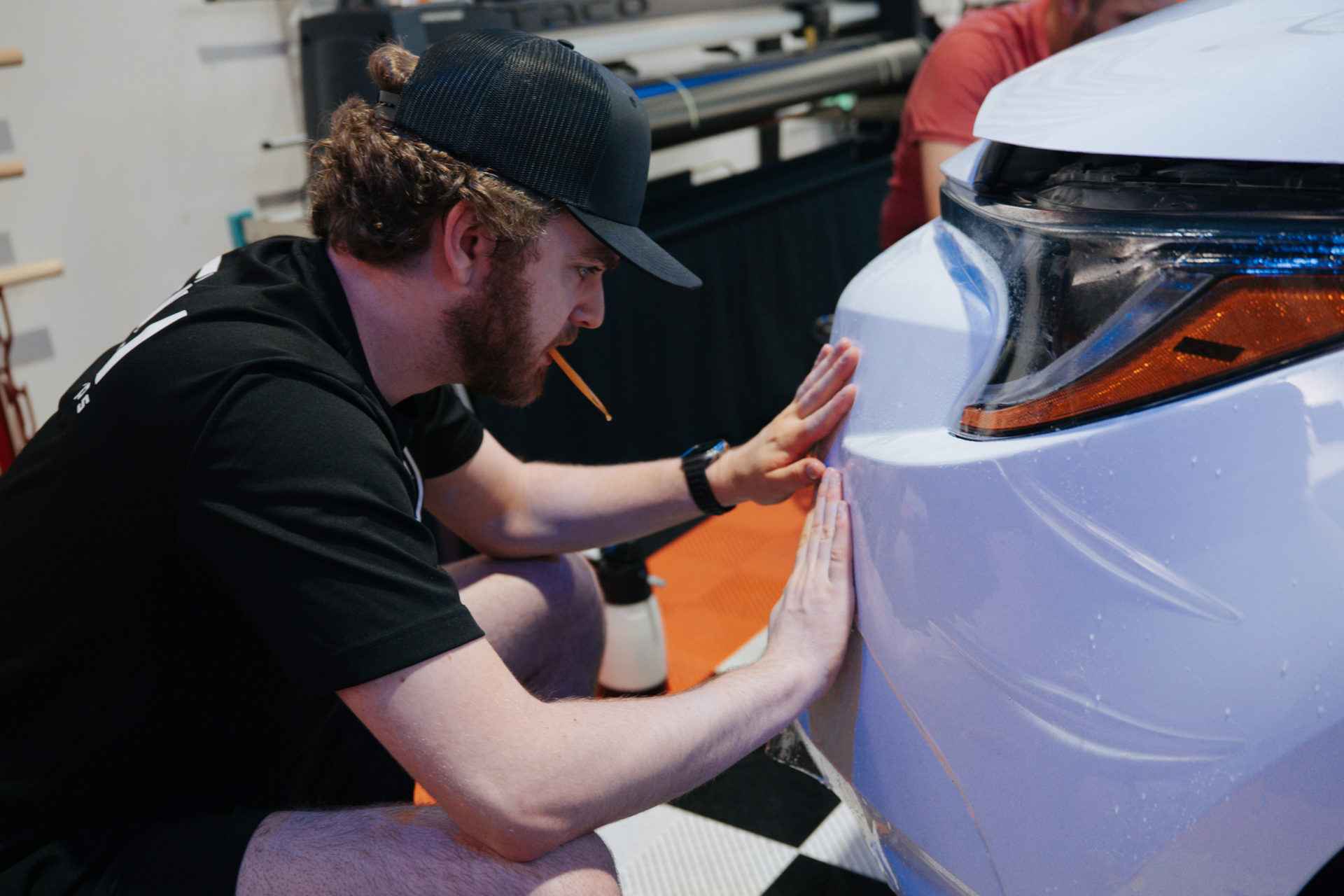
PPF is the only one of the two that stops the damage that actually leads to rust. Film takes the hit from sand and gravel so the paint underneath never gets chipped — which means salt never gets a foothold. Quality film also self-heals light swirls with heat (a warm garage or the summer sun), so brush marks from winter don’t stay.
That’s why the front of the car is where we focus: bumper, hood, fenders and mirrors take nearly all of the impacts. Rocker panels and the area behind the wheels are the second hot zone in winter, because tires throw slush and sand straight at them. Our paint protection film packages are built around exactly those areas.
Where ceramic coating still helps
Coating isn’t useless in Minnesota — it’s just not chip protection. A good coating makes salt film, slush and road grime release much more easily, so you can rinse the car more often without scrubbing. That means fewer wash scratches and less time with brine sitting on the paint. It also adds gloss and UV protection for the rest of the year.
What a coating won’t do: stop a rock, stop sand from pitting the hood, or prevent a chip from turning into rust. If a shop tells you a coating will protect against rock chips, ask them to show you.
Do you need both?
For many Minnesota drivers, the best value is PPF on the high-impact areas, and either a coating or a good sealant on the rest. The film handles the damage you can’t fix with a wash; the coating makes the whole car easier to keep clean through salt season. Our GeoShield Ceramic Shield film already has a hydrophobic top layer, so water and slush bead off the protected areas on their own.
A few rules of thumb we use when helping customers decide:
- New vehicle, daily highway commute: Full Front PPF. This is where you’ll see the most rock chips by far.
- Lease or tight budget: Partial Front PPF on the bumper and leading edge of the hood — the most-hit areas for the least money.
- Truck or lifted vehicle: Front PPF plus rocker panels and door edges; big tires throw a lot of material.
- Garage-kept summer car: Coating may be enough if it rarely sees highway speeds or winter roads — add film if it sees the open highway.
Timing matters in Minnesota
The best time to protect paint is before it gets chipped, which usually means right after you buy the car or before the first salt run of the season. Film can’t un-chip paint, so existing chips should be touched up first. We install indoors in Ham Lake year-round, so a winter install is no problem — and it’s often the smartest timing.
Want an honest recommendation for your vehicle and commute? Get a free quote or stop by the shop at 1359 153rd Ln NE in Ham Lake. You’ll get a straight answer — even if that answer is “you don’t need the bigger package.”