
“Should I get ceramic tint?” is the question we hear more than any other at our Ham Lake shop. The short answer: if you care about heat, glare and comfort — not just looks — ceramic is usually worth it. But dyed and carbon films still have a place. Here’s an honest breakdown of how each type works, what the numbers mean, and which one fits Minnesota driving.
The quick answer
- Dyed film is the budget choice for looks and privacy. It darkens glass but does the least to block heat.
- Carbon film adds real heat rejection and a matte, non-reflective look, with no signal interference.
- Ceramic film uses non-metallic nano-ceramic particles to reject far more infrared heat — without needing to go darker — and is the clearest to see through.
- All four of our films block 99% of UV and carry a lifetime warranty. The difference is mostly heat and clarity.
How window tint actually blocks heat
Sunlight hits your car as three things: ultraviolet (UV), visible light and infrared (IR). UV is what fades interiors and damages skin. Visible light is what you see — and what tint darkness (VLT) measures. Infrared is what you feel as heat.
That’s why darkness and heat rejection are two different things. A dark dyed film blocks visible light but mostly absorbs heat into the glass, so the window itself gets warm and some of that heat still reaches you. Carbon and ceramic films are engineered to stop more of the infrared part of the spectrum — ceramic most of all — so a lighter ceramic film can keep a car cooler than a darker dyed one.
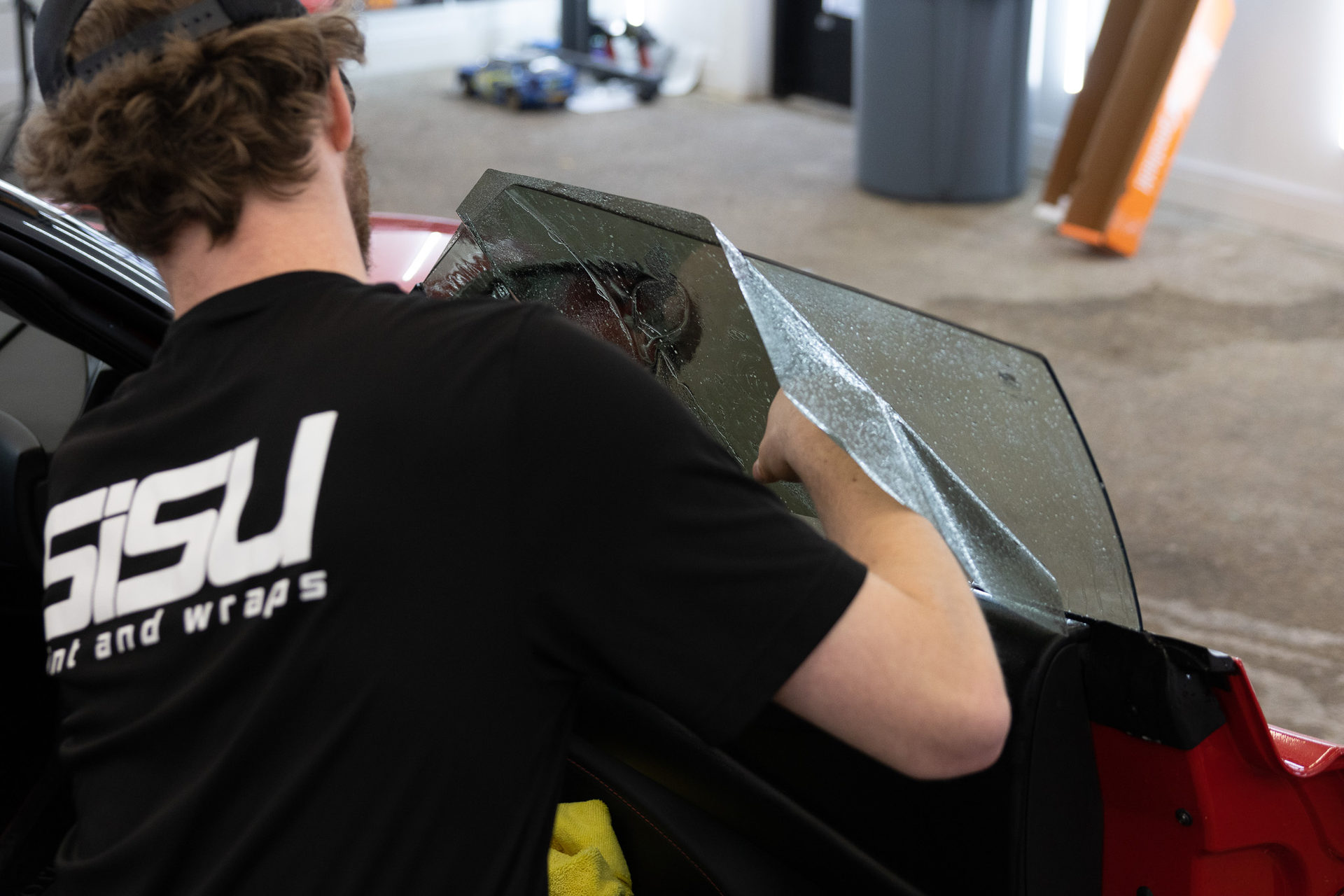
Dyed vs. carbon vs. ceramic: side by side
These are the four GeoShield films we install, from entry level to our best heat control. Full details and pricing are on our automotive window tint page.
| Film | Type | IR heat rejection | Best for |
|---|---|---|---|
| Pro Classic | Deep dyed | — | Factory-matched looks and privacy on a budget |
| C2 Carbon | Nano carbon | 34%+ | A step up in heat control with a sleek matte look |
| C2 Ceramic | Nano carbon + ceramic | 71%+ | Daily drivers who want a noticeably cooler cabin |
| Apex Ultra | Nano ceramic | 95%+ | Maximum heat and glare control, long commutes, EVs |
Every one of these films blocks 99% of UV rays, is color stable and won’t interfere with GPS, cell or radio signals. Older metallic films could cause signal issues — that’s one reason we don’t use them.
Why ceramic makes extra sense in Minnesota
You can’t go dark on the front windows
Minnesota law requires front side windows to let in at least 50% of visible light (with a 3% tolerance), and that’s also the limit on side and rear windows of most sedans and coupes. Since you can’t lean on darkness for comfort, a high-performance ceramic film at a legal shade is the way to get real heat rejection. Our window tint page walks through the rules by vehicle type, and the full statute is on the Minnesota Revisor’s site.
Summer heat and winter glare
July sun bakes a parked car, especially on dark interiors and big glass SUVs. Then from November through February the sun sits low in the sky and shines straight into your eyes on morning and evening commutes on I-35W, Highway 10 or Highway 65. Ceramic film cuts both — heat in summer and glare in winter — while keeping the clearest view at night.
EVs and big glass
Electric vehicles and newer SUVs often have huge rear glass and panoramic roofs. Less heat coming in means the A/C works less, which can help comfort and range on hot days. If you drive an EV, ask us about Apex Ultra.
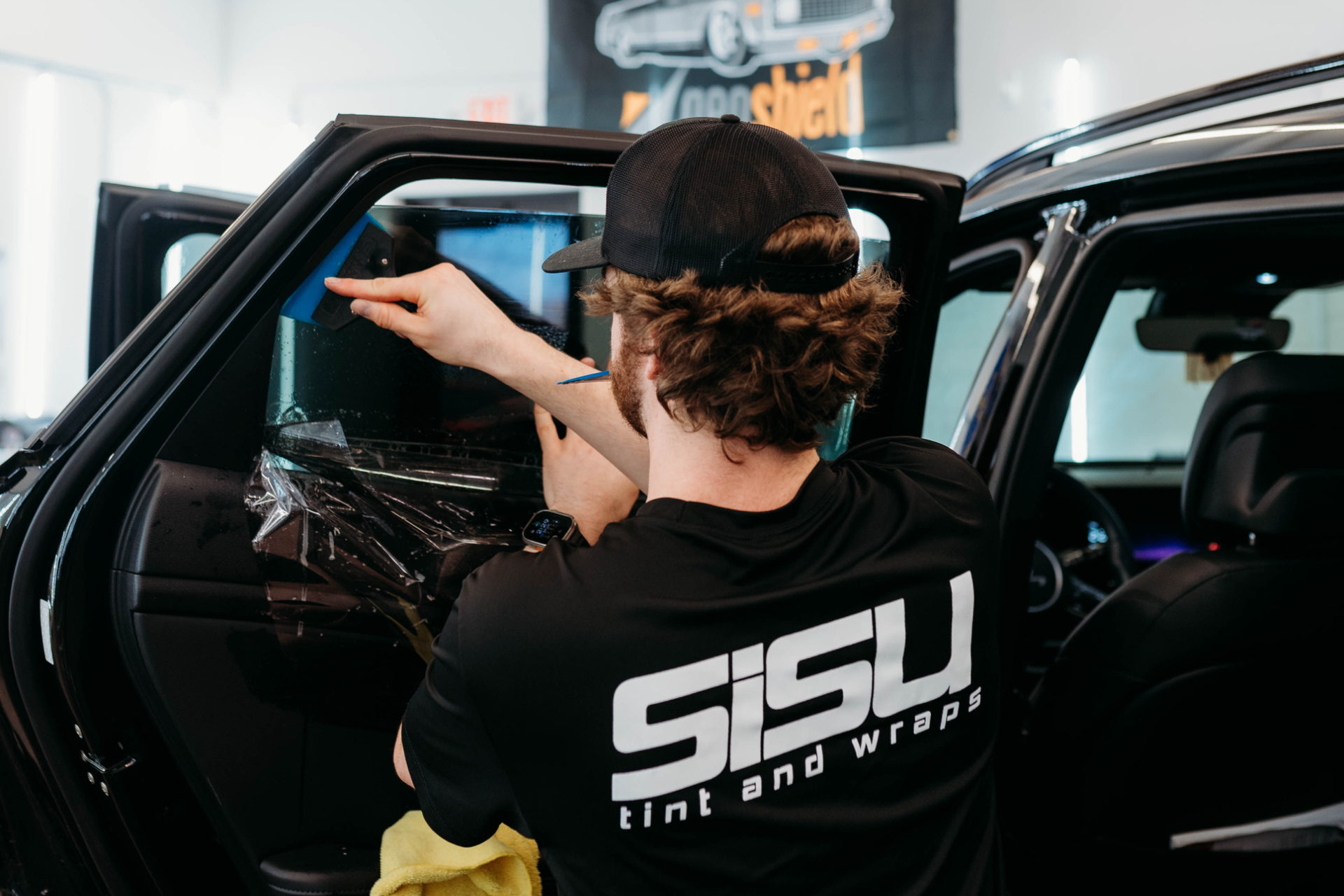
Is ceramic tint worth the extra cost?
For most daily drivers, yes. You feel the difference every time you get into a car that’s been sitting in the sun, and you keep that comfort for as long as you own the vehicle — every film we install carries a lifetime warranty. Ceramic costs more than dyed or carbon film; exact pricing depends on your vehicle and the film you choose, and full-vehicle tint starts at $249.99.
Dyed or carbon can still be the right call if the car is mostly garage-kept, you’re after looks or privacy rather than heat control, or you’re working with a tighter budget. We’ll tell you honestly which one makes sense — no upsell.
Common myths
- “Darker tint is always cooler.” Not true. Heat rejection depends on the film technology, not just darkness. A lighter ceramic film can outperform a darker dyed film.
- “Ceramic tint is a ceramic coating.” No — ceramic tint is a window film with ceramic particles in it. Ceramic coatings are a paint treatment.
- “Tint will bubble and turn purple.” That was a problem with old, low-quality dyed films. Modern color-stable films installed correctly don’t bubble, peel or turn purple — and ours are warrantied against it.
- “I can roll my windows down right away.” Give it 2–5 days, longer in deep cold. See our tips for curing time.
FAQ
Is ceramic tint better than regular tint?
For heat rejection and clarity, yes. Ceramic film rejects far more infrared heat than standard dyed film without needing to be darker, stays color stable and won’t interfere with electronics. Dyed film is the budget option mainly for looks and privacy.
Does ceramic tint block UV better?
Not by much — quality dyed, carbon and ceramic films all block about 99% of UV. The real difference is infrared heat rejection and glare control.
Can I get ceramic tint legally in Minnesota?
Yes. Minnesota limits how dark tint can be, not what it’s made of. Ceramic film is available in legal shades, which is exactly why it’s popular here — you get strong heat rejection at a legal darkness.
Does ceramic tint interfere with my phone or GPS?
No. Ceramic and carbon films are non-metallic and signal-safe. Some older metallic films could cause interference.
How long does ceramic window tint last?
With quality film and a professional install, it should last the life of your vehicle. All of the automotive films we install carry a lifetime warranty.
Get the right film for your car
Not sure which film fits your vehicle and budget? Request a free quote or stop by our Ham Lake shop Monday–Friday, 8–5 (Saturday by appointment). We tint cars, trucks and SUVs for drivers across the North Metro, including Blaine, Andover, Coon Rapids and Minneapolis. Thinking about your home too? Read Is Home Window Film Worth It in Minnesota?