
A quality vinyl wrap handles Minnesota winters well — as long as you treat it a little differently than paint. Most of the wrap damage we see in spring isn’t from the cold itself. It’s from ice scrapers, stiff brushes, aggressive car washes and salt left sitting on the film. Here’s how to keep a color change wrap, chrome delete or tuxedo wrap looking sharp until the snow melts.
1. Never use an ice scraper on vinyl
A scraper will cut or gouge wrap film, especially at panel edges. Keep scrapers on the glass only. To clear snow off wrapped panels, use a soft foam snow broom and push snow off rather than scrubbing. If there’s ice on a wrapped roof or hood, let the defroster and cabin heat loosen it instead of chipping at it.
2. Rinse the salt off often
Road salt and brine don’t eat vinyl the way they attack bare metal, but dried salt is abrasive and dulls the finish over time — especially on gloss and satin films. Aim to rinse the car every week or two during salt season, and more often after a big storm. Focus on the lower panels and behind the wheels, where brine builds up first.
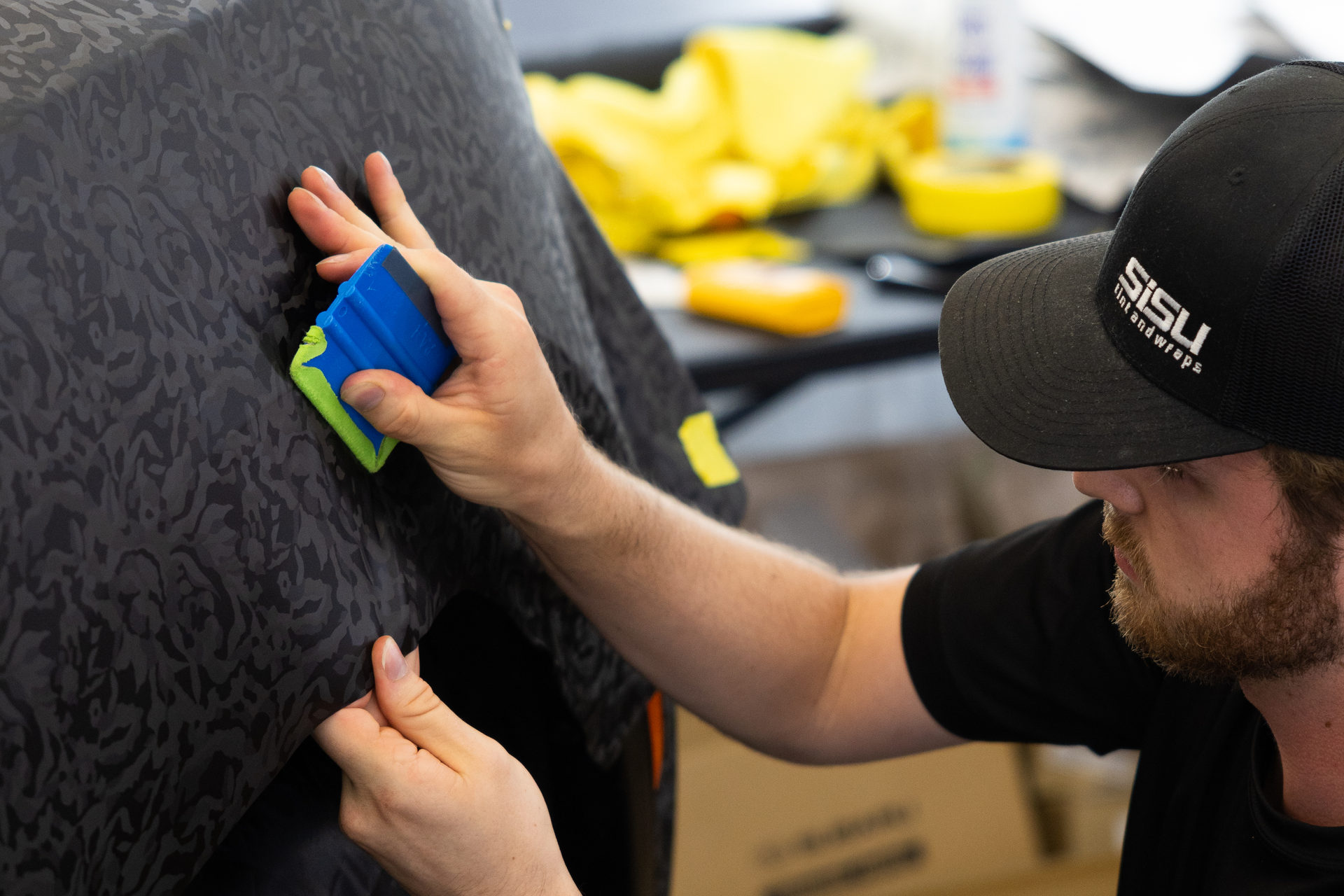
3. Choose the right car wash
- Best: a touchless automatic wash or a hand wash with a pH-neutral soap and a clean microfiber mitt.
- Avoid: brush-style automatic washes. The brushes can catch film edges and leave scratches.
- Pressure washers: use a wide fan tip, keep the nozzle well back from the surface (at least a foot), and never aim straight at seams or edges. Edges are where water can force its way under the film.
4. Let it warm up before you wash
Vinyl gets stiffer in deep cold. Washing a frozen car, or blasting cold film with hot water, is hard on both the film and its edges. On sub-zero days, wait for a warmer afternoon or use a heated self-serve bay and let the car sit inside for a few minutes first.
5. Matte and satin wraps need special care
Matte and satin films can’t be polished or waxed — wax fills in the texture and leaves shiny blotches. Use soaps and sprays made for matte finishes, and never use a polishing compound on any wrap.
6. Watch the edges
Edges and seams are the first place a wrap shows wear. Once a month, walk around the car and look for any edge that’s starting to lift, especially on bumpers and around door handles. Small lifts are easy to fix early — let us know and we’ll take a look before slush and salt get underneath.
7. Add a protective topper
A spray sealant or ceramic spray made specifically for vinyl adds a slick layer that helps salt and grime rinse off. It also adds UV protection for summer. Make sure the product is labeled safe for vinyl — and matte-safe if you have a matte wrap.
Thinking about wrapping before winter?
A wrap also protects the paint underneath from chips and salt, so it can be a smart move before the season starts. We install color change wraps, chrome deletes, tuxedo roofs, and headlight and taillight smoke in our Ham Lake shop year-round. See all our vinyl wrap services, or request a free quote.